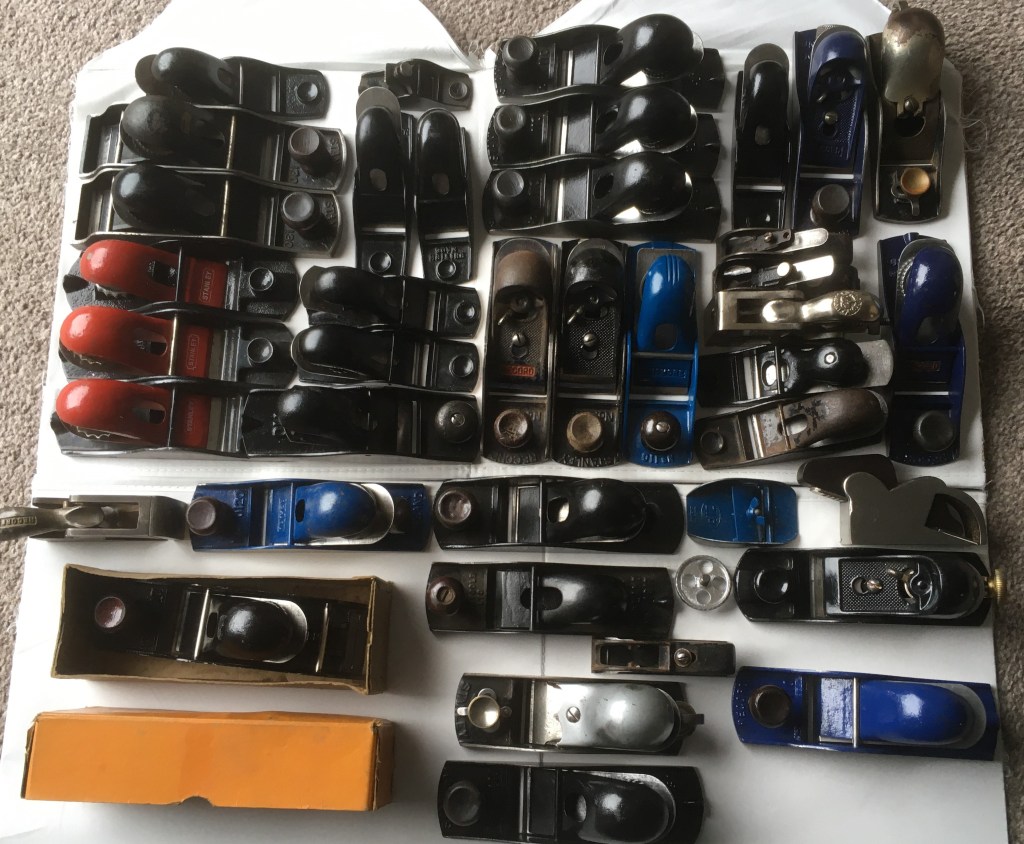
The block plane may not be the crown jewel of a collector’s cabinet, but it deserves far more admiration than it often receives. Compact, versatile, and deceptively powerful, this tool is a quiet workhorse—always ready, always useful.
While collectors may chase after rare infill planes or ornate joinery tools, the block plane remains a steadfast companion in both the workshop and the restoration bench. Its simplicity belies its utility: from chamfering edges to trimming end grain, it excels in tasks that demand finesse and control.
🔧 Why Every Craftsperson Should Own One
- Precision in the Palm of Your Hand: Its small size allows for one-handed use, perfect for delicate adjustments and tight spots.
- Ideal for End Grain: With a low-angle blade, it slices through end grain cleanly, something larger planes often struggle with.
- Quick Touch-Ups: Whether you’re fitting a drawer or easing a sharp edge, the block plane is the go-to for fast, accurate tweaks.
- Beginner-Friendly: Easy to set up and forgiving to use, it’s a perfect introduction to hand planning for novices.
- Portable and Practical: Toss it in your tool bag, and you’ve got a reliable ally wherever you go.
🛠️ A Collector’s Quiet Delight
Though not always the centerpiece of a collection, block planes come in a variety of styles and vintages that reflect the evolution of toolmaking. From early Stanley models to modern Veritas designs, each tells a story of craftsmanship and innovation. Their affordability and abundance make them an accessible entry point for new collectors, while rare variants still offer intrigue for seasoned enthusiasts.
✨ In Praise of the Everyday
In a world that often celebrates the rare and elaborate, the block plane reminds us of the beauty in utility. It’s a tool that earns its keep not through ornamentation, but through performance. And for those who restore tools, it’s often the first to be sharpened, tuned, and put back to work.

 The old tool collector