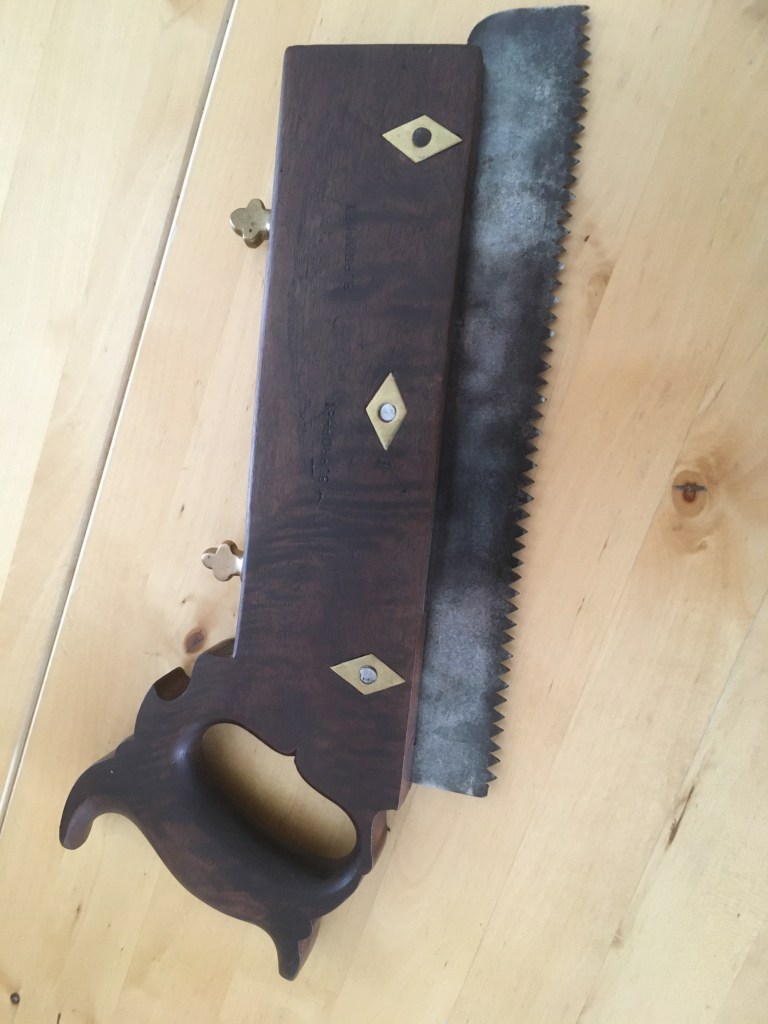
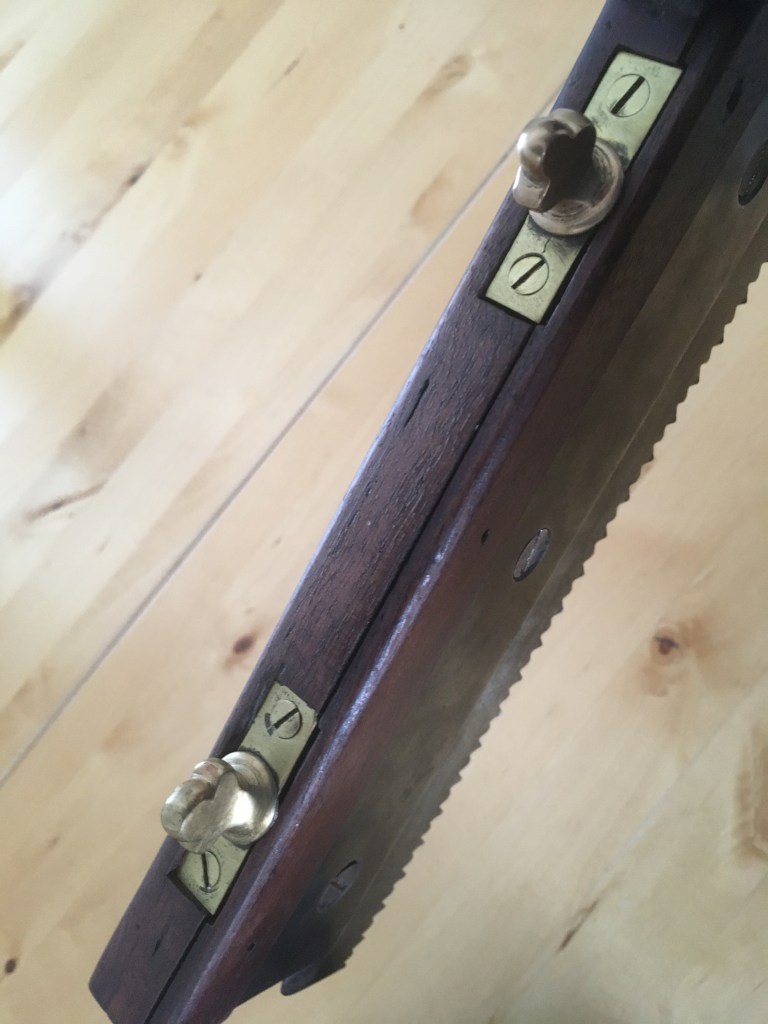

A staircase hand saw is a specialized hand tool with an adjustable depth stop, historically used by woodworkers to cut the grooves (dados) in stair stringers. Today, it is more commonly used for other woodworking tasks, particularly for cutting precise dado and stopped dado joints.
Key features
- Adjustable depth stop: A defining characteristic of this saw is a removable or adjustable block that limits how deep the blade can cut. This allows for uniform, shallow cuts.
- Directional cutting: Unlike most handsaws, the blade on a staircase saw has no rake, allowing it to cut efficiently in either a push or pull motion.
- Design variations: While early versions had a simple wooden body, more modern and robust kits may feature brass hardware for the depth adjustment. The handle can be either open or closed.
- Versatility: Though originally made for stairs, the tool is useful for any woodworking project requiring accurate, repeated dado joints, such as building bookshelves or casework furniture

 The old tool collector