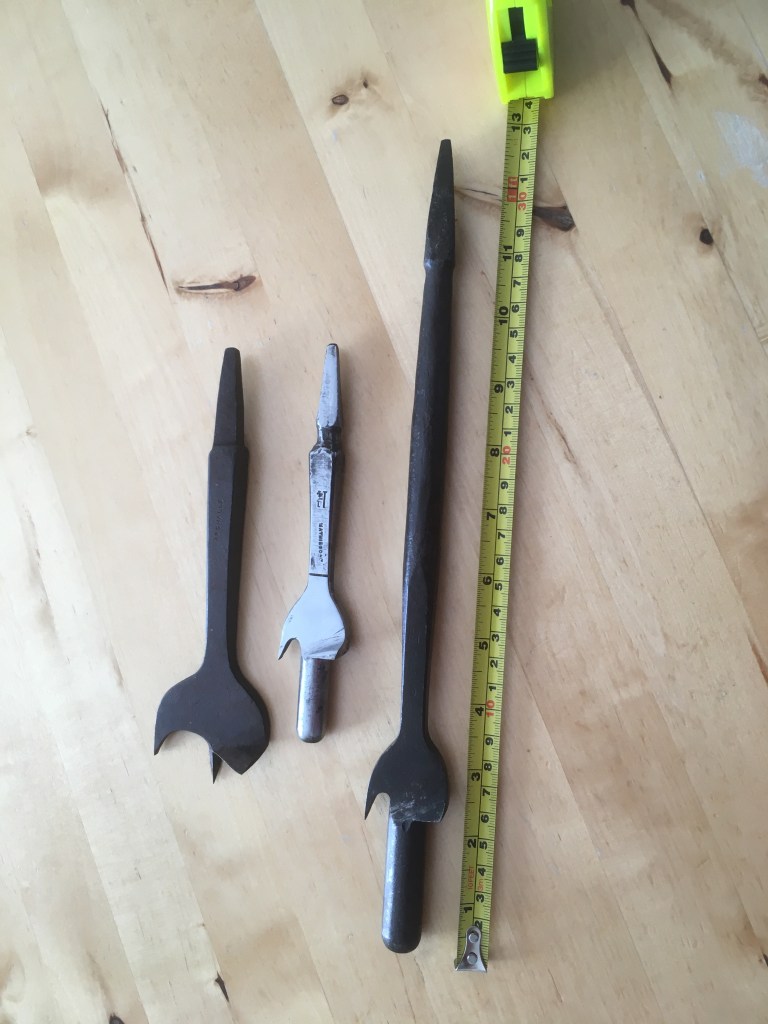
Deck Dowelling Bits

In the past, craftspeople, particularly shipwrights, used specialised bits for creating and plugging holes in decking. These antique tools are now primarily collector’s items.

  • Shipwright’s dowelling bit: These tools, often marked by makers like Mathieson or David Flather, were also known as plug center bits.
  • Function: The bit counterbored a hole for a fastener and also cut a precisely fitting dowel (or “bung”) to cover the screw or bolt head. The dowel was then glued in place to create a smooth, flush finish. 

Modern plug-cutting methods

Today, the process of plugging screw holes is achieved with modern tools, often in kit form, which provides a clean and finished look for unpainted decks. 

  • Plug cutter: A plug cutter is a drill press attachment that cuts plugs with a slight taper from a piece of scrap decking. This is ideal for matching the wood grain of the plug to the deck board for a nearly invisible repair.
  • Forstner or spade bit: For a less refined but still effective approach, a Forstner or spade bit can be used to drill the initial hole.
  • Installation: After drilling the hole and driving the screw, a wooden dowel is glued in, tapped into place, and cut flush with a flush-cut saw. 

Removing old dowels

If you need to remove old, rotted, or broken dowel plugs, a few tools can help:

  • Plug cutter: Drill around the dowel with a plug cutter that has a larger diameter than the original dowel to cleanly remove it.
  • Drill bit: You can use a drill bit of the same size or slightly smaller to bore into the center of the old dowel. This will weaken the wood and allow you to pry it out.
  • Extractor or puller: While more for industrial or mechanical dowels, specialised pin pullers and extractors exist for stubborn pins and can be adapted for wood
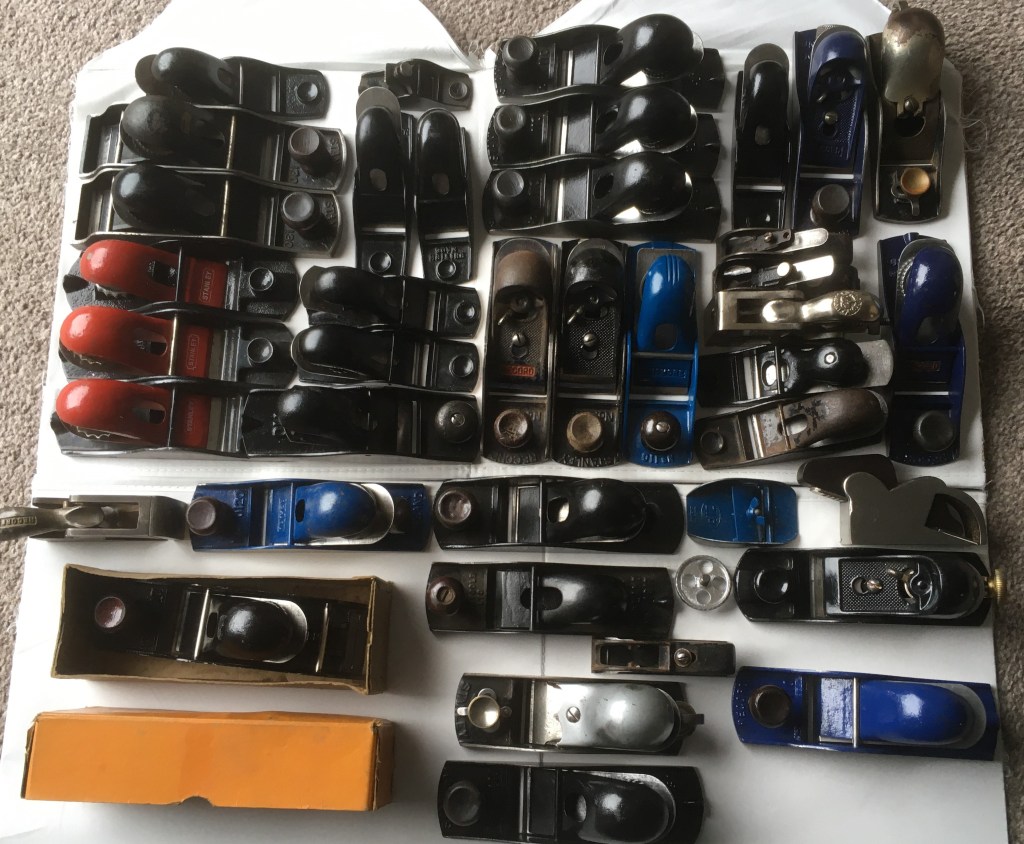
🪚 The Unsung Hero: The Common Block Plane

The block plane may not be the crown jewel of a collector’s cabinet, but it deserves far more admiration than it often receives. Compact, versatile, and deceptively powerful, this tool is a quiet workhorse—always ready, always useful.

While collectors may chase after rare infill planes or ornate joinery tools, the block plane remains a steadfast companion in both the workshop and the restoration bench. Its simplicity belies its utility: from chamfering edges to trimming end grain, it excels in tasks that demand finesse and control.

đź”§ Why Every Craftsperson Should Own One

  • Precision in the Palm of Your Hand: Its small size allows for one-handed use, perfect for delicate adjustments and tight spots.
  • Ideal for End Grain: With a low-angle blade, it slices through end grain cleanly, something larger planes often struggle with.
  • Quick Touch-Ups: Whether you’re fitting a drawer or easing a sharp edge, the block plane is the go-to for fast, accurate tweaks.
  • Beginner-Friendly: Easy to set up and forgiving to use, it’s a perfect introduction to hand planning for novices.
  • Portable and Practical: Toss it in your tool bag, and you’ve got a reliable ally wherever you go.

🛠️ A Collector’s Quiet Delight

Though not always the centerpiece of a collection, block planes come in a variety of styles and vintages that reflect the evolution of toolmaking. From early Stanley models to modern Veritas designs, each tells a story of craftsmanship and innovation. Their affordability and abundance make them an accessible entry point for new collectors, while rare variants still offer intrigue for seasoned enthusiasts.

✨ In Praise of the Everyday

In a world that often celebrates the rare and elaborate, the block plane reminds us of the beauty in utility. It’s a tool that earns its keep not through ornamentation, but through performance. And for those who restore tools, it’s often the first to be sharpened, tuned, and put back to work.