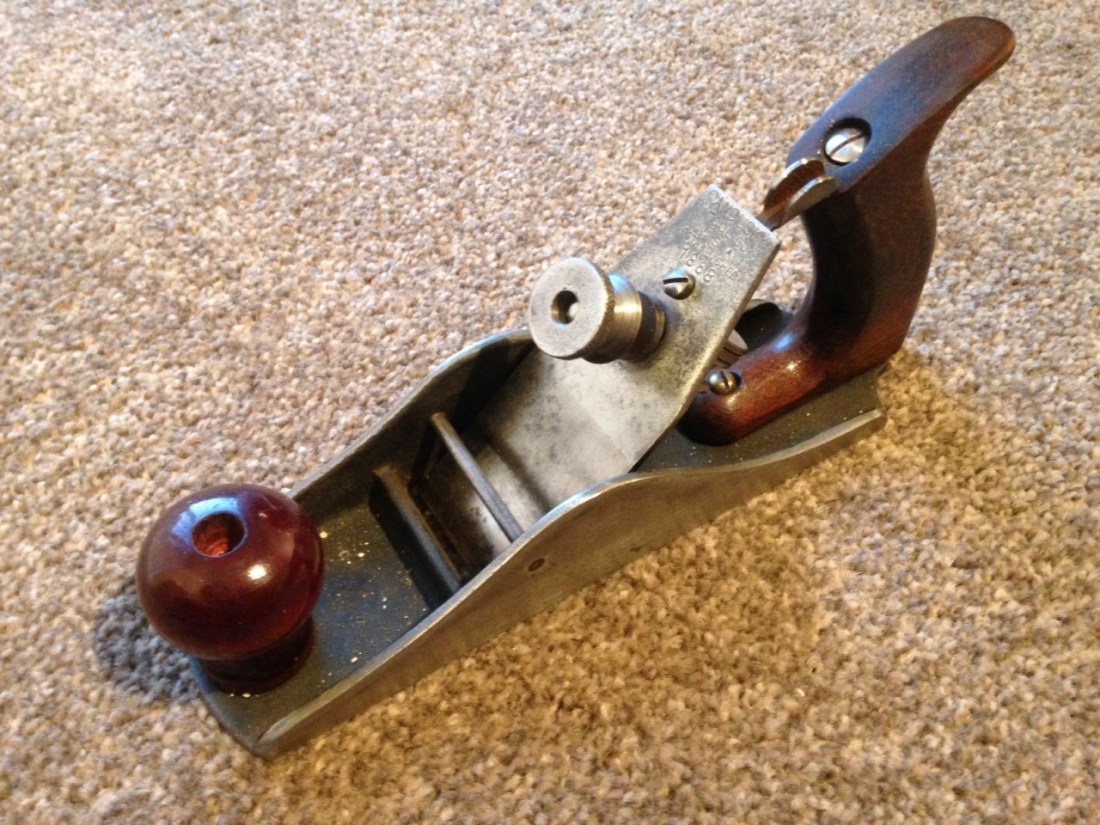
The definitive book on Spiers of Ayr planes

spiers of ayr planes through much tribulation nigel lampert


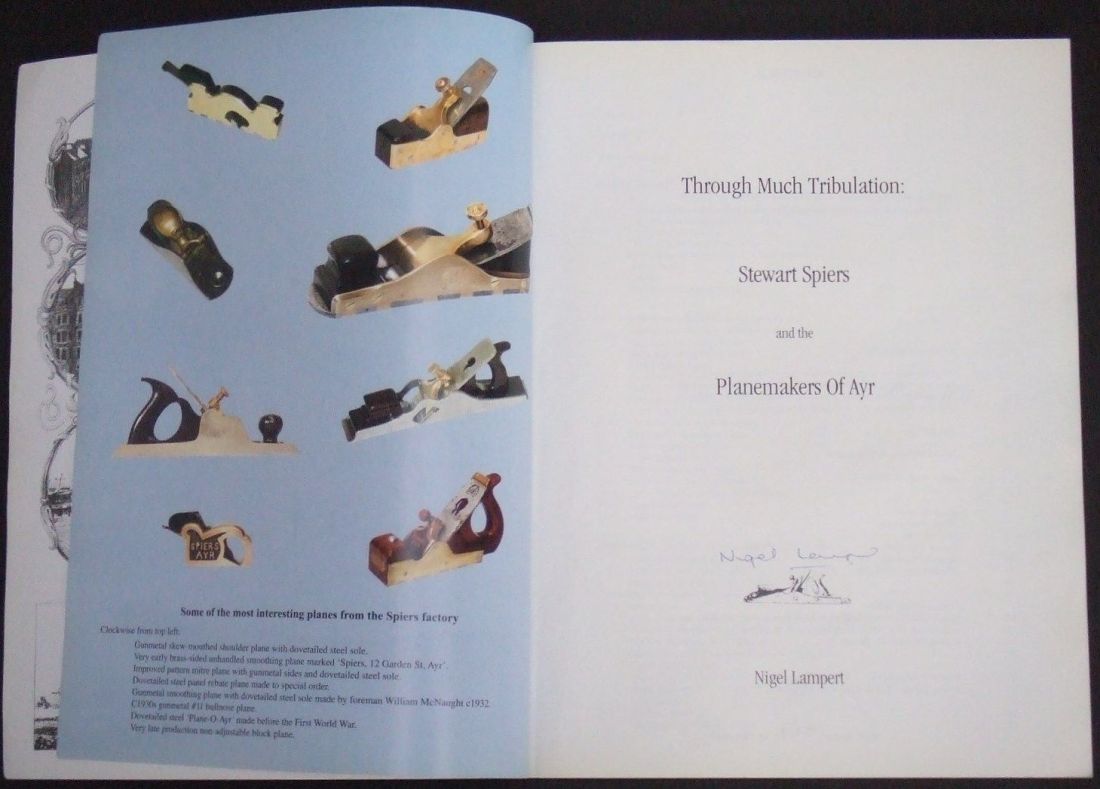
As a long time collector of Spiers planes, I have been on the lookout for Through Much Tribulation by Nigel Lampert. I have tried several times to secure one from the online store but until now have been unsuccessful. I saw this one and made an offer to the seller, who accepted my bid.

If the reports are to be believed this is the definitive book on Spiers planes. This one will be read and reread over and over, it’s not one for a glass case.

My next task is to get a Mathieson catalog, which I have also been searching for.

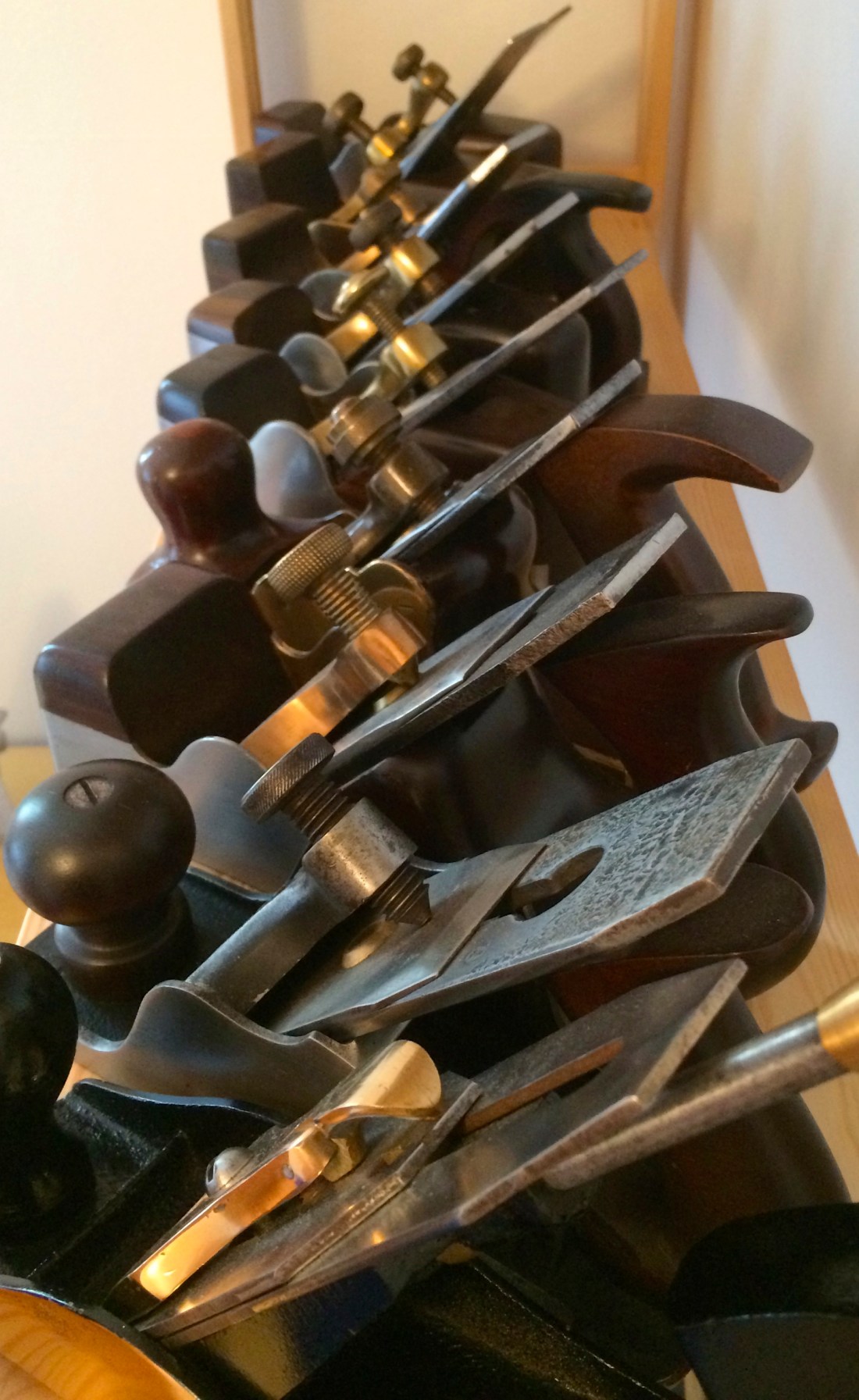
Infill plane collectors.

If you are at all interested infill planes there is a group that I have joined on Facebook.

https://www.facebook.com/groups/851641525018912/ The group is dedicated to the use and collection of this type of plane. It has quite a few noted members who have a fountain of knowledge on this subject and they can be called upon to answer questions from the beginner to seasoned collectors like me.IMG_5481

Restoration of a late Norris A5

I purchased this Norris from the online shop. Mostly just as a change of tack. I had just finished restoring two very nice Spiers panel planes and was about to start on a Mathieson Smoother when I noticed a beat up Norris online. Although I see myself a Spiers collector I still have an interest in the other makers.

When I received the plane it had the usual surprises. The adjuster was loose and bent, the lever cap screw was too big to fit into the adjuster and there was a crack to the handle. “Nothing to see here,”


There isn’t much that can’t be put right.

Norris A5 plane late

The plane is now in my workshop and I’ll see how it goes.

restored Norris late A5 carpenters plane

A couple of days in the workshop and you have the above result. Over the coming years, the japanning will get richer and the brightwork will dull, job done.

Guaranteed Tools Limited (GTL)

GTL of 12-13 Chiswell Street, Finsbury (London, EC1) was a tool supplier that operated between the 1920s and 30s . The tools they had on offer were aimed at the DIY and amateur carpenter market.

GTL’s newspaper adverts suggested that rather than spending money on leisure activities, you could instead make money by investing in their tools or a tool chest: “MAKE EXTRA MONEY IN YOUR SPARE TIME WITH THE ALL BEST BRITISH G.T.L. TOOL CHEST AND HOME REPAIRING OUTFIT”.

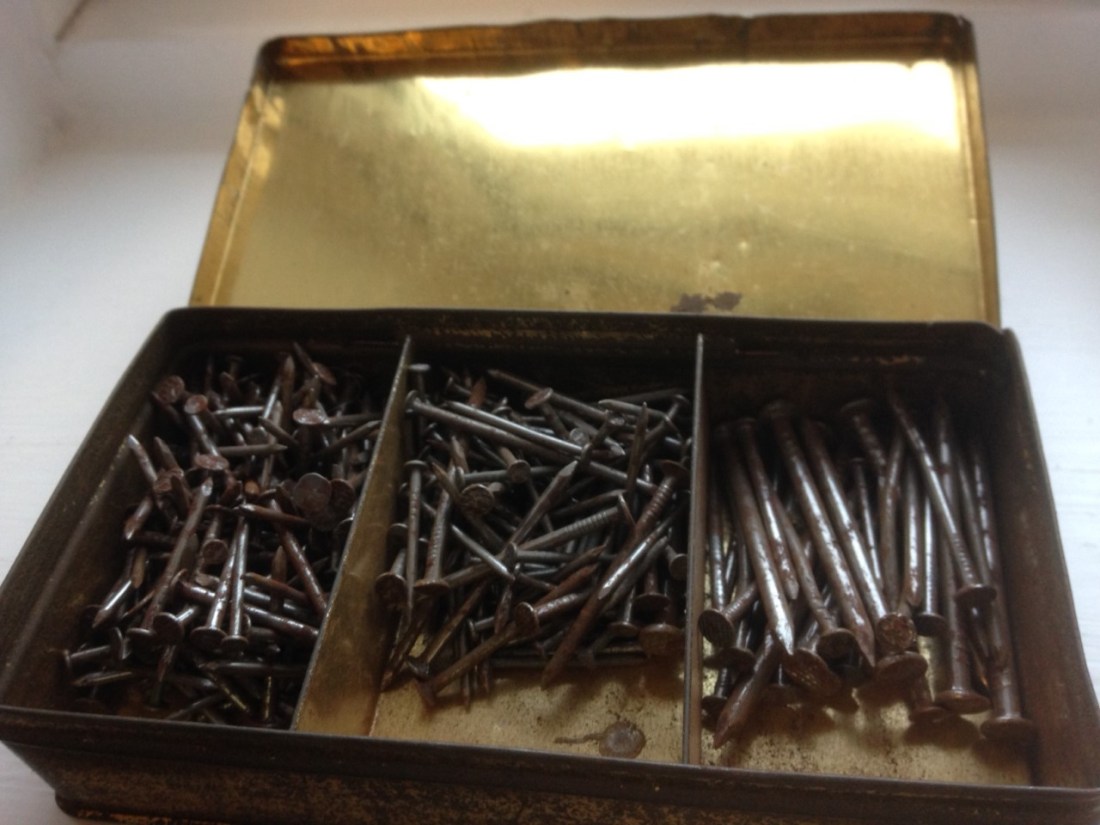
The GTL Chest Assorted nails and Tacks

GTL Nails Guarateed Tools Limited

A FEW SHILLINGS BRINGS YOU THE G.T.L. TOOL CHEST AT ONCE ON A SEVEN DAYS APPROVAL“. The balance to be paid by small monthly sums to suit your pocket.

NO EXPERIENCE REQUIRED” – a free instruction booklet supplied with every tool chest contained 200 working illustrations to ensured immediate success.

Initially, the guarantee was that all the tools supplied would be manufactured by British subcontractors. “BETTER  THAN EVER VALUE” in the 1938/39 catalogue the guarantee then became “FINEST SHEFFIELD TOOLS.”

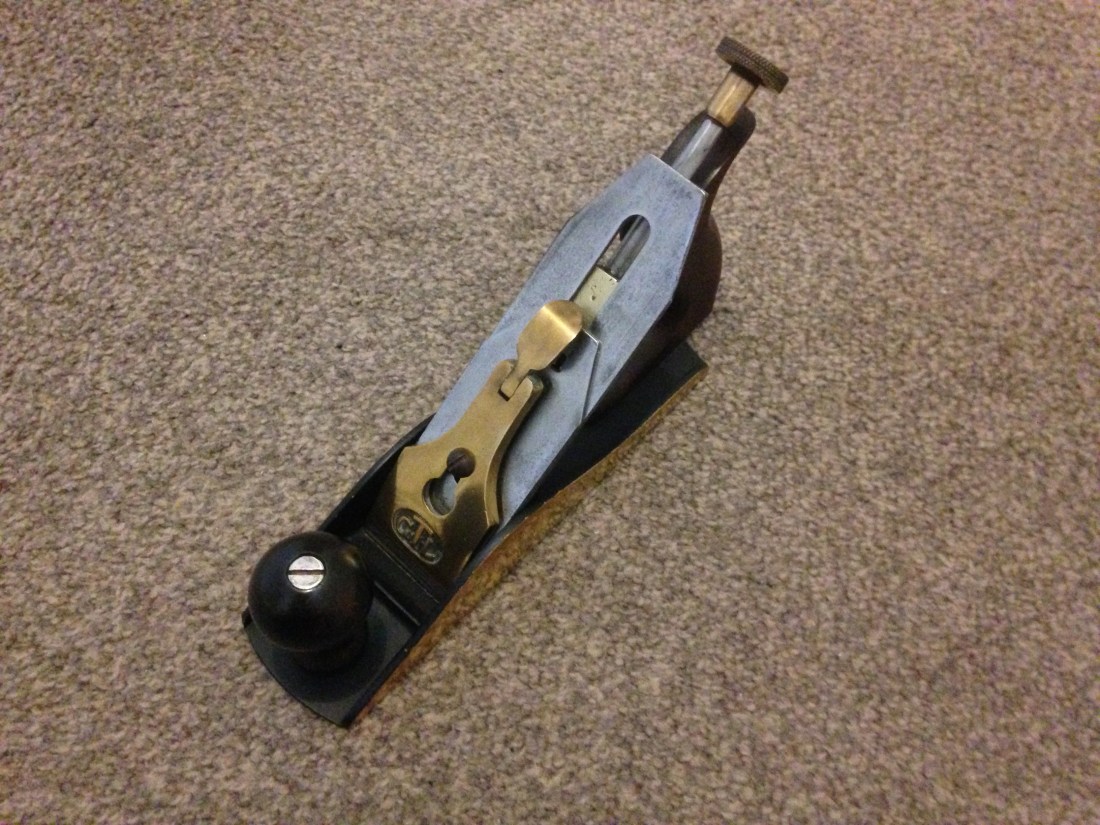
The best known GTL tool is the brass plane, often described as having a ‘Norris-type’ adjuster.

IMG_2063


Antique tools or are they just old tools?

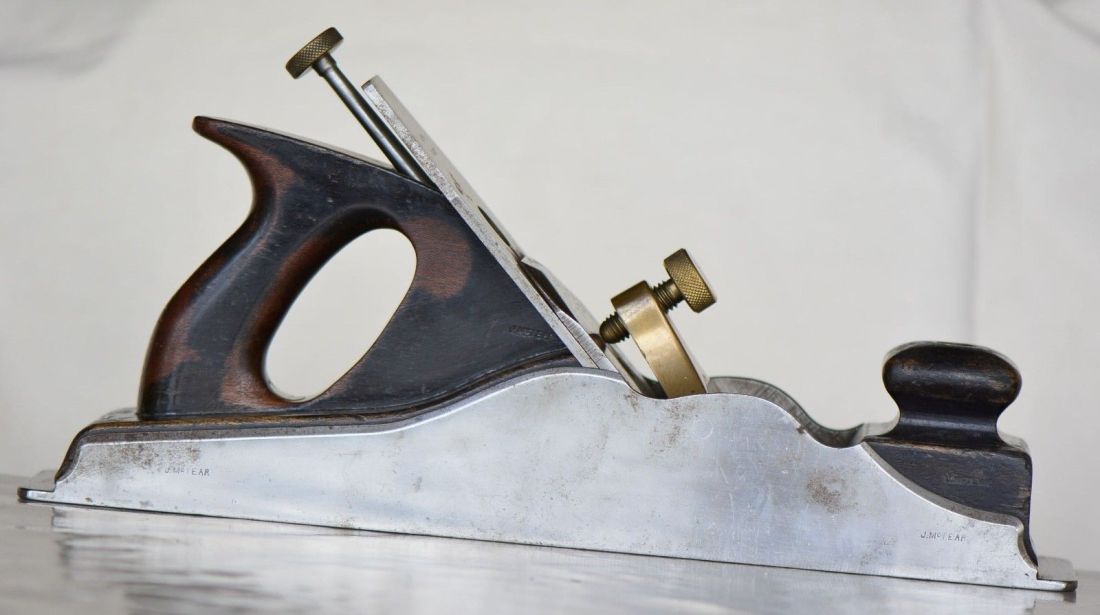
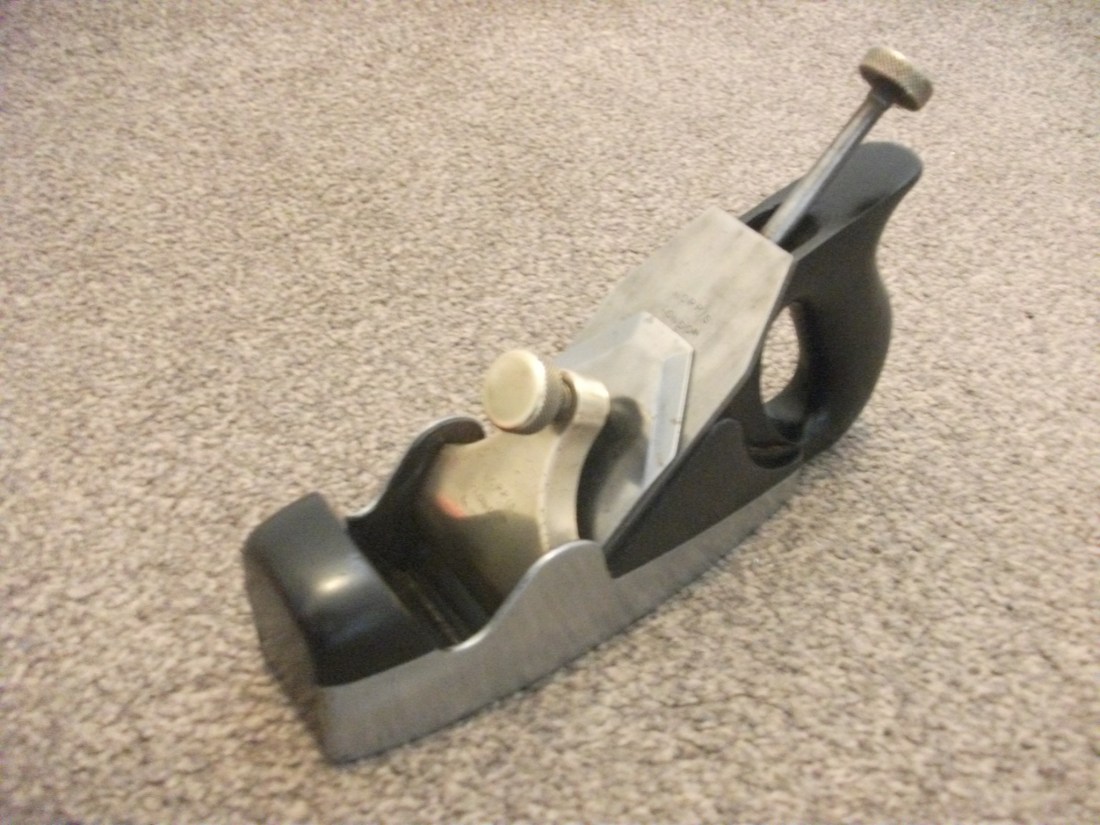
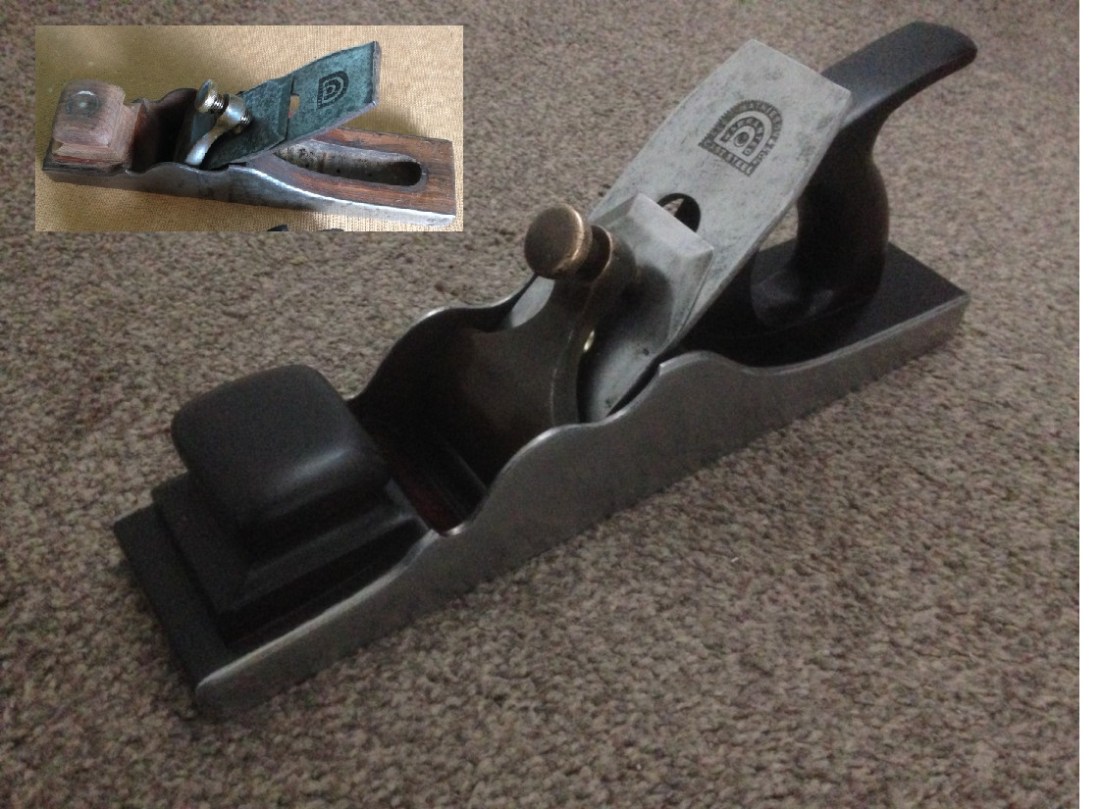
Today I went onto my favorite web forum The Antique and Vintage Tool Forum, subdivision Infill Plane collectors. As usual, there was a question from a newbie on whether or not he should restore the damaged infill in a plane that he had just purchased. To my mind, the question is, are you capable of restoring the plane back to a reasonable condition. The plane below, a 13 1/2″ Spiers of Ayr, was in a sad condition when I purchased it. A week in the shop and it was completely restored to spiffy.

spiers-plane-of-ayr-old-tool-antique-tool-carpentry-tool12

My answer to the guy asking the question would be if you can go ahead if you can’t leave well alone.

If you were to buy a similar plane to the one above from a modern infill plane maker it would cost around $1800.00 USD or more. This Spiers (the pinnacle of plane making) can be bought for $300.00, Where is the antique value in that. It is just an old tool.

Sandusky 3 SC (corrugated metal plane)

sandusky 3 c

Sandusky 3SC (corrugated) plane

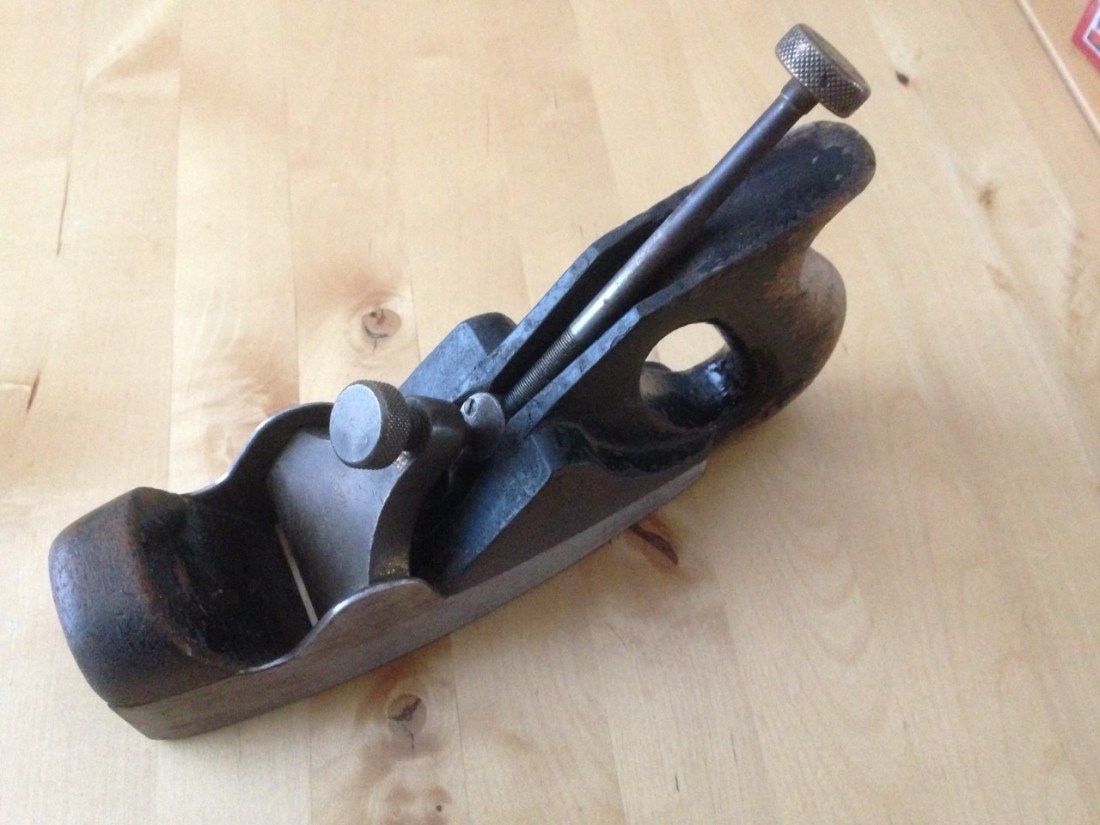
The plane above is Sandusky 3 SC (corrugated) plane. When I purchased it  I had no idea of the story behind it. It’s a rare beast in this neck of the woods. So when I got it home I, of course, did some research and found that it was the great maker’s effort at making metal planes to compete with Stanley. It is fairly scarce and I was very pleased with my purchase.
The plane itself was in a very nice condition. When I came to strip it down I couldn’t release the lever cap. I put the screw into a vice and began to turn. What my research didn’t tell me was that the screw had a reverse thread. I turned and I turned, then snap, the lever cap was broken. Which shows that every day is a school day. Live and learn!

“The Victor, Johnson’s Patent” – a brass-framed adjustable blind nailing plane

The Victor johnson patent nail plane Horst auctions

Listed in Horst Auction website as: Unusual “The Victor” Patent, brass-framed adjustable blind nailing plane with adjustable pitch & extendable arms. Stamped: THE VICTOR, JOHNSON’S PATENT.

Not entirely sure how this plane is used. The previous one listed on the web reads as above. This one has most of its original plating + a blade and blade holder and seems to be complete.  Going for sale on the online store.

The Glasgow reciprocating drill (Gyro).

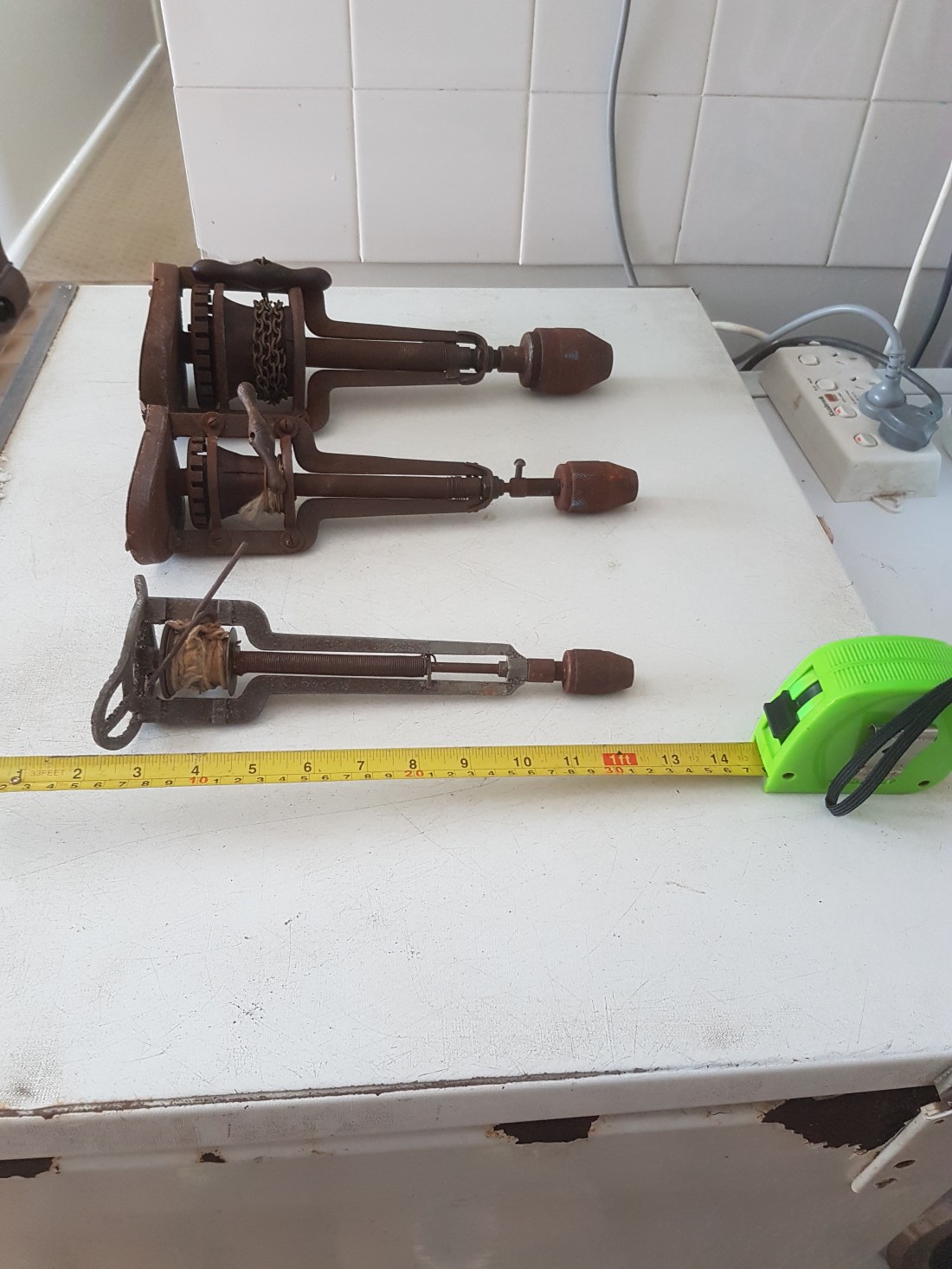
The Glasgow is an uncommon type of reciprocating drill that uses a spring-loaded pull chain for the turning motion. The chain is pulled by an elegant rosewood handle and when allowed to recoil, the chain is picked up on a rosewood spindle. This one is labeled The Glasgow with a British patent date and is made of sheet metal with a lid on the breastplate for bit storage. The manufacturer is McG.S. ltd and sold under the name Gyro which is also stamped on the drill


Shortly after posting this blog, I was contacted by Gordon Mcgregor, the grandson of the inventor of the “Gyro” Alexander Mcgregor.  Here is the information provided by Gordon.

A wee bit of background – my grandfather died in 1929 I think it was, long before I was born. He was also Alexander, hence my middle name. My grandmother was Louisa Smith (‘McG S’ stands for McGregor Smith – my grandmother’s maiden name) from Stroma in the Pentland Firth. They lived in Osborne Street where I think my Dad was born, and later lived in Jail Square, now called Jocelyn Square. I have no idea where his workshop was, but I suppose it must have been somewhere in the East End. I’m afraid I don’t have any photographs of either of them, but one of my sisters, still in Scotland may, though we have no idea who is who in those old pictures.

I have never tried to look up the patent(PAT 12691-07), but I presume the ‘07’ is the year it was filed, He also had a patent on a record turntable which was driven by a strange looking figure-of eight mechanism, for which I have the drawing somewhere, and apparently he did build one, but I only know of its existence from my Dad’s stories of long ago.

Anyhow, the photos with this email show the three drills, the heavy one with the chain, the lighter one which used to have a blind cord – I’ll replace the light string with some decent cord – and the prototype, which was handmade in white metal and has a brass spindle.The Glsgow drill 001
 

I did see a photo of a chunkier Gyro for sale, with a cylindrical body, rather than the flat steel he used for yours and mine. I think that was a better idea, or he might have put a handle on to make it more attractive and user-friendly. Again according to my Dad, it came out about the same time as the ‘eggbeater’ style of drill, which had money backing it, so although he did sell some (no idea how many), old Alex McGregor’s idea just couldn’t get off the ground.

That’s about all I can think of, I hope the photos are of some pleasure to you, and I hope your ‘Glasgow’ still flourishes after more than 100 years.

A footnote from Gordon:

I called my sister last night, and she provided a couple of further bits of information, which may be of interest. The ‘Glasgow’ may not refer to the name of the drill, as my Grandad was trading as ‘The Glasgow Tool and Bit Company’ so it may be more accurate to call the drill the ‘Gyro’.

Rose Ann also reminded me that Grandad had worked on, or created, the model ships which are (or were) on display at Kelvingrove Museum. So next time you are in there, see if you can get a look at them. She added off-the-cuff that he had worked on the Milngavie Monorail – I had never heard of it – but I looked it up and it was a prototype monorail built in the 1920s between Bearsden and Milngavie, by a George Bennie. I think Grandad just worked on the construction, but again, I don’t know.

I would like to thank Gordon and his family for supplying this information, enabling the story of this piece of working history being recorded for posterity.  Alex